Midsummer: Exploring the Lore of my Ancestors

Practicing as a guest in a traditional medicine is genuinely an honor. Years of following the seasonal rhythms and practices steeped in taoist tradition and East Asian healing practices has ultimately connected me more deeply with my own heritage. Being so innately drawn to a healing system that communes with nature for guidance, the roots of my own ancestry feel more in sync with my ancestral practices from long ago.

Midsummer: The Traditions of Northern European Pagans
Midsummer is the ancient Northern European pagan celebration of the summer solstice, the longest day and shortest night of the year. As the sun sets on June 23-24, people come alive with magic, ancient traditions, folklore, fire, music, singing, dancing, and spending time with friends and family. Celebrated as a national holiday in Sweden, Latvia, Lithuania, Denmark, Estonia, Finland, Norway, this tradition dates back to the Neolithic Era, from 10,000 BC to c. 2,000 BC.

As these traditions gained popularity and spread from Scandinavia throughout Europe, they blended with Christianity, aligning them with the feast of St. John the Baptist on June 24. This night is believed to hold special powers, with people often casting love and fertility spells, or even getting married. Though there is a connection to Christianity in St. John’s Day, the ancient Midsummer traditions of celebrating light, fertility, love, harvest, and life long predate Christianity. Up until 1952, Midsummer Eve was celebrated on June 23. Because of how close the day fell to the celebration of John the Baptist on June 24, the Midsummer Eve celebration was moved to fall on the Friday between June 19-25.

Rituals

Bonfires: Lit as the sun sets, bonfires are an essential ritual to celebrate the shortest night of the year. They burn through the short night, until the sun rises, and are lit to spread light, fertility, and good fortune as far as possible. In Finland, it is believed that loudly singing and dancing would bring luck and drive away evil spirits. The Danes celebrate Sankt Aften (St. John’s Eve) by lighting large bonfires topped with straw effigies of witches to drive away evil spirits and protect the community. The Finnish build bonfires on the lake shore, taking dips in the cool water throughout the night. In Latvia, fires are lit to represent the sun’s power, and jumping over the flames is believed to cleanse negative energy and bring good luck.

Food and drink: Cheese and beer are the two most essential foods for a Midsummer celebration. Jāņu siers, or Midsummer cheese, is a fresh sour-milk cheese made from milk, curd, and caraway seeds. Beer is the beverage of choice, with local and homemade brews made special for the celebrations. In Sweden, popular Midsummer foods include fresh new potatoes lightly boiled with dill, pickled herring, Swedish meatballs, crisp bread, butter, cheese, and a glass of Aquavit. Dessert includes Swedish strawberries served with whipped cream or in a strawberry cake, called jordgubbstårta.

Singing and dancing: There are two types of Midsummer singing, the first of which is Līgošana. These songs are about fertility and good fortune. Aplīgošana are fun and friendly songs about teasing friends, family, and neighbors. In Denmark, the Midsommervisen is a cherished hymn that celebrates the brilliance of summer’s light. Paired with toasts of Aquavit, there are over 12,ooo recorded Swedish drinking songs. The Latvian folk songs are often sang in sing along form, with “Līgo!” being a popular refrain.

Games: No party is complete without games, and the Swedish have many that they play once the Midsummer feast is done. Femkamp is a set of 5 playful challenges, ranging from sack races, egg and spoon runs, to made up games involving blindfolds. Kubb is a wood block game with the objective of knocking over 10 blocks to finally knock over the king. Played on the lawn, each family has their own house rules, and the lively debate that arises is part of the fun.

Maypole: The midsommarstången, or maypole, is the most famous symbol associated with the Midsummer celebration. Though the maypole tradition originated in Germany during the Middle Ages in connection to their celebration of May Day, the practice came to Sweden and became part of their Midsummer traditions. The maypole was a tall tree trunk decorated with greenery and positioned in the village green at the start of the festival. Dancing around the maypole with ribbons is an old custom to welcome in the summer. Modern dancers weave ribbons around a pole instead of a tree, and are positioned in pairs of boys and girls. The dance creates a multicolored pattern which weaves itself down the pole as the dance progresses. To undo the ribbons, dancers reverse their steps. This dance represents the lengthening of the days of summer.

Different countries have different maypole traditions. In Austria and Germany, the pole is called a maibaum and is painted with the Bavarian blue and white stripes. Villagers position the pole in the village where it is decorated after a procession.

Wildflower wreaths: Women make and wear flower crowns woven from daisies, cornflowers, and clover. In Latvia, homes and barns were decorated with birch, oak, rowan branches, ferns, oxeye daisies, bents,fresh greenery, thistles, nettles, and flowers. Nettles and thistles were attached to door frames specifically to keep out evil spirits. Wearing a wreath or crown of flowers symbolized fertility and rebirth. To prolong the flower’s powers, the wreaths and crowns were dried and used to keep the family healthy throughout winter.

Oak leaf wreaths: Men wear wreaths woven from oak leaves to symbolize strength.

Folk Beliefs:

- Stay awake all night, or risk sleeping through the rest of the year. You are meant to great the sunrise in the morning.

- Jumping over the Midsummer fire will prevent mosquitos from biting you for the rest of the summer.

- Flower wreaths should be made of nice different flowers, with nine blooms of each flower. If you sleep with the wreath on your head, you will dream of your future betrothed.

- Throw your wreath into an apple, and the number of times it falls is the number of years you have until marriage.

- If you bathe naked in the morning as the sun rises after solstice night, you will be healthy and beautiful.

- If you find the mythical fern flower, you will have good luck and fortune.

- Place seven different types of flowers under your pillow to dream of your future spouse. But stay silent as you pick, or the magic will not work.

- Promote good health by walking in the dew as night turns to dawn.

- Couples who hold hands while jumping over a bonfire will be bound together.

A stunning celebration of love and life, Midsummer is all about welcoming summer, sharing food and drink with friends and family, and practicing magic with the belief it will bring good fortune for the rest of the year. From weaving flower crowns to dancing around the maypole, people for generations have been celebrating with their traditions and customs to bless their harvest, bring good luck, and even fall in love. Though an ancient practice, celebrating

Midsummer is still just as relevant today as it was centuries ago, and is open to all those who feel that special magic on the longest day of the year.

References

● https://baltictours.com/midsummer-in-the-baltics-st-johns-day

● https://www.heirloomartco.com/blogs/journal/a-modern-midsummer-finding-meaning-in-ancestral-traditions

● https://visitsweden.com/what-to-do/culture-history-and-art/swedish-traditions/midsummer-tradition/midsummer-sweden-something-another-world/

● https://www.visitfinland.com/en/articles/everything-need-to-know-about-midsummer/

● https://www.letthejourneybegin.eu/celebrating-midsummer-in-latvia/

● https://eng.lsm.lv/article/features/features/20.06.2022-latvian-midsummer-festival-basics-explained.a462276/

● https://www.almanac.com/content/midsummer-day\

● https://www.latvia.travel/en/summer-solstice-celebrations

● https://www.efdss.org/learning/resources/beginners-guides/37-english-folk-dance/2191-maypole

● https://www.efdss.org/learning/resources/beginners-guides/37-english-folk-dance/2191-maypole#

● https://www.oakhousefoods.co.uk/blog/blog/2019/05/03/the-maypole-what-does-is-it-and-what-does-it-signify/?srsltid=AfmBOoqkj9asErQ8ARMT6O5io83fpSt2nd6ACGEpdMZc6WGC30YrwpgJ
Activating the Ear: Auricular Acupuncture

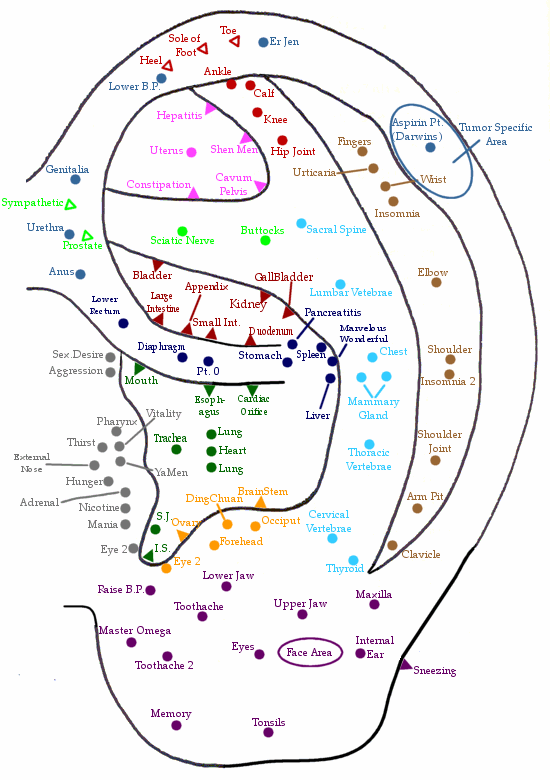
Auricular acupuncture is the practice of stimulating specific points along the outer ear, and is viewed as a full body approach to healing. Commonly used to treat insomnia, anxiety, stress, or addiction, regulate the nervous system, and support bodily functions, it is a non-invasive and gentle treatment that offers numerous benefits. Each point is believed to be connected by nerves and reflex pathways to different parts of the body, like the head, heart, spine, liver, stomach, and practitioners will use fine needles, tiny metal balls, ear seeds, or gentle electrostimulation as techniques to treat a patient’s specific needs. This acupuncture technique is gaining popularity in both Eastern and Western health traditions by combining the knowledge of traditional ear mapping with modern neural connections.

Source: TCMstudent.com

How it Works
Cranial nerves like the vagus nerve, trigeminal nerve, and facial nerve all have branches that reach the outer ear, and when they are stimulated, parts of the brain that regulate mood, stress, pain perception, and bodily regulation are stimulated. Stimulating points on the ear sends neurological signals through the nervous system, switching into a parasympathetic state, which promotes rest and relaxation. Endorphins are released that reduce pain and discomfort, and enhance feelings of well being. Released neurotransmitters and hormones regulate mood, sleep, and appetite, and stimulation of the vagus nerve balances heart rate, digestion, and inflammation.

Physical and Mental Ailments
Auricular acupuncture is beneficial for individuals seeking a natural treatment with minimal side effects, those healing from trauma, grief, or addiction, those experiencing chronic tension or burnout from a high stress lifestyle, or those with hormonal imbalances.

● Stimulating the musculoskeletal points relieves inflammation that causes back pain, sciatica, or joint discomfort

● Treats migraines and tension headaches

● Eases symptoms like bloating, gas, or sluggish digestion

● By shifting and balancing hormones, symptoms of menstruation and menopause are lessened

● Stimulating facial nerve points releases jaw clenching and treats TMJ

● Certain ear points reduce the fight-or-flight response, easing feelings of anxiety and panic attacks, and encourages relaxation

● Feelings of depression and low mood can be eased by balancing serotonin levels

● Physical aid for processing and regulating emotions

Benefits

● Relief from chronic and acute back, joint, or muscular pain

● Reduced anxiety and stress

● Improved, more restorative sleep

● Enhanced focus and mental clarity, reduced brain fog

● Support through addiction or withdrawal by easing cravings during recovery

● Regulates digestion and metabolism, aiding in weight loss and management

● Increased blood flow and circulation

Home Practice
Stimulation of auricular points can be self administered at home through the use of ear seeds and an ear acupressure point chart. Ear seeds are tiny balls made of either a plant called vaccaria or metal, and are adhered to ear acupressure points with tape. They are then gently pressed throughout the day to stimulate the points, and are often used after an acupuncture session to prolong the healing effects. More accessible points to reach include the Ear Shen Men, which calms the mind, eases anxiety, aids in better sleep, and lessens stress, and Point Zero, which balances the body’s energies.

Whether applied with needles or ear seeds, stimulation of points along the outer ear can provide immense relief from physical, mental, and emotional ailments. TCM teaches that pressure points connect the body through nerve pathways, and activation of certain points can bring your body back to balance. With a detailed chart or with a practitioner’s help, this practice is accessible to anyone and can be self administered.


References

● https://burlingtonacupuncture.com/health-well-news/auricular-acupuncture-what-it-is-and-why-is-everyone-talking-about-it/

● https://acaacupuncture.com/auricular-ear-acupuncture-what-it-treats-how-it-works-and-who-its-for/

● https://www.emmaquine.com/auricular-acupuncture

● https://www.alldeepmassage.com/ow-give-yourself-ear-acupressure/

Cycle 6: Men Changing in Midlife

In Traditional Chinese Medicine, men age in cycles of 8 years governed by Jing, or essence that
is stored in the kidneys. Each 8 year cycle marks different changes, and cycle 6, ages 40-48, is when peak vitality has started to decline. While women experience more obvious symptoms of midlife changes, like the cessation of period and the end of childbearing years, the changes men experience can be more subtle. These changes are also hormonally driven, as testosterone naturally drops when men hit their forties and fifties. Symptoms range from physical to mental, and can be supported and alleviated through acupuncture, lifestyle changes like nutrition and stress management, and herbs that support kidney function.

Common Symptoms
- Physical: reduced muscle bulk and strength, hair loss, height loss, increased body fat in the belly, indigestion, decreased libido, reduced testosterone levels, impotence, anemia, infertility,night sweats, fatigue.
- Mental: depression and irritability, poor concentration, reduced self confidence.

Remedies
Since aging is linked to the decline of Jing, treatment revolves around supporting and maintaining the remaining Jing and kidney yang. Techniques like acupuncture, moxibustion, and herbal blends are all Jing and Yang boosting, and can help ease symptoms related to cycle 6 aging for men.

Acupuncture:
The practice of inserting thin needles into acupressure points throughout the body is used to balance and stimulate the flow of Qi. Stimulation of certain points can increase blood flow to the reproductive system, regulate hormone levels, and reduce stress.

Moxibustion:
Moxibustion is the Traditional Chinese Medicine practice of burning mugwort (moxa) near specific acupuncture points on the body to stimulate circulation, improvise energy flow, and enhance vitality. The heat from burning the moxa penetrates the skin, increasing blood flow and relieving muscle tension. This alleviates symptoms associated with fatigue and low energy levels. Increased circulation also supports reproductive health, regulating testosterone levels, restoring hormonal balance, and improving mood. Moxibustion is also known to manage stress and anxiety and support immune function.

Herbs:
- Liu Wei Di Huang Tang is one of the most famous herbal formulas for kidney support, as it replenishes kidney essence, supports hormonal balance, and strengthens the reproductive system.

- Shu Di Huang nourishes kidney yin and replenishes kidney Jing, which are responsible for vitality, hormonal balance, reproductive health, healthy fluid production, lower back strength, and for combating age related decline.

- Astragalus root helps protect kidney function by boosting Qi, improving circulation, reducing fatigue, and supporting immune resilience.

- Ren Shen Jian Pi Tang is a spleen strengthening formula that supports kidney health by improving digestion and creating higher quality Qi and blood, which reduces tax on the kidneys. When this system is nourished, the kidneys can maintain optimal functionality, which is regulating fluids and supporting hormonal balance.

Nutrition:
Warming foods like soups and broths, root vegetables, avocados, olive oil, walnuts, flaxseeds, chia seeds, salmon, chicken, turkey, eggs, broccoli, cauliflower, brussel sprouts, kale, spinach, swiss chard, berries, pomegranates, bananas, quinoa, brown rice, oats, lentils, chickpeas, black beans, turmeric, ginger, garlic, greek yogurt, cottage cheese, oysters, pumpkin seeds, soft rice or millet congee. Proper protein and mineral intake is important to maintain strength as you age.

Make sure food is lightly cooked to make it easier to digest.- Steamed or sauteed vegetables, warm fruit instead of raw fruit, and room temperature or warm drinking water.

Sleep and stress management:
Sleep is crucial in preserving Jing. When the body gets deep, consistent rest, the body is allowed to repair and regenerate, while chronic sleep deprivation accelerates depletion and decline. Practice no electronics before bed, establish a calming routine, and minimize stimulation to best support quality sleep. Along with sleep, relieving stress is so important to maintaining Jing.

Chronic stress levels disrupt hormonal balance, weaken Qi, and accelerate aging. Acupuncture and light exercise can help regulate the nervous system and promote long term vitality. The midlife hormonal changes men experience are not only about sex drive; the drop in testosterone affects mood, weight regulation, muscle loss, weakness, and hormonal imbalances.

To combat these symptoms, consult a TCM practitioner to find a treatment plan that works best for you. Acupuncture and herbs, proper nutrition to support digestion, quality sleep, and stress management are all important lifestyle changes to adopt to best support your body through the changes of aging, maintain Jing, and increase overall vitality.

Resources

● https://scottsdaleintegrativeacupuncture.com/blog//blog/men-and-midlife-3-tips-for-navigating-sucessfully

● https://www.drxiangjun.com/blog/mens-health-series-signs-of-male-menopause

● https://www.orientalremediesgroup.com/tcm-clinic/articles/do-men-go-through-menopause/

● https://acaacupuncture.com/blog/womens-7-year-cycles-and-mens-8-year-cycles-in-traditional-chinese-medicine/

● https://www.ginsen-london.com/blog/chinese-herbs-for-kidney-health/

● https://berkeley-acupuncture.com/2025/07/21/vitality-digestion-tcm-older-adults/

● https://trtgulf.com/key-principles-of-moxibustion-for-mens-health/