

In Traditional Chinese Medicine, each organ and bodily system is connected by meridians and channels, or pathways, through which Qi and blood flow. When a headache presents itself, the location of the pain can indicate which channel is experiencing stagnation or deficiency, and can reveal which corresponding organ is struggling. The location of your headache, whether it be frontal, temporal, vertex, whole head, or behind the eyes, creates a map that can diagnose and treat the root cause of your pain. Factors like stress, diet, emotions, or external factors like wind and cold can manifest as pain along pathways. Proper treatments like tea, diet, and acupressure can help reduce pain while acupuncture, reiki, massage, and sauna use can be used to address underlying causes and prevent future headaches from returning.
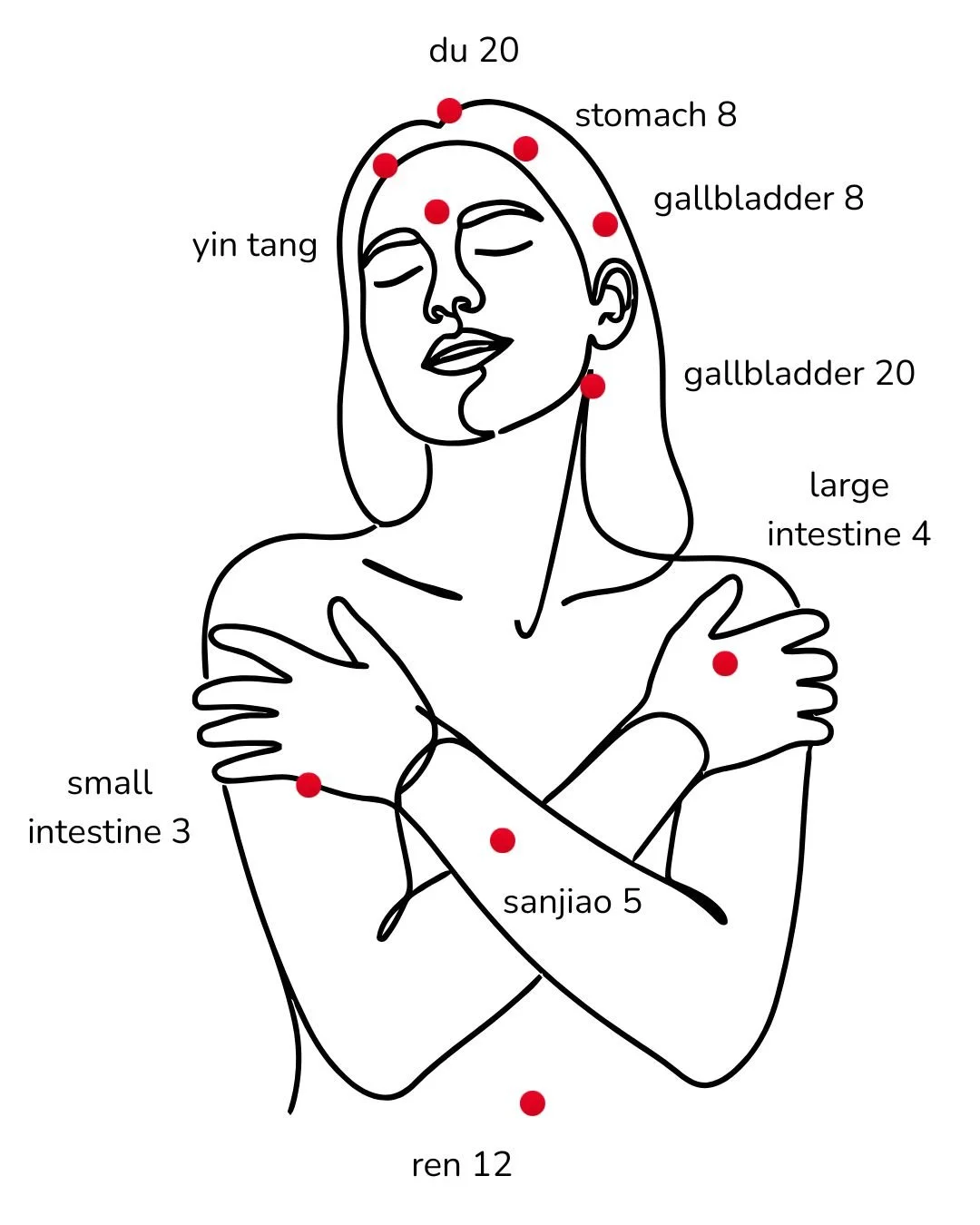
Acupressure points for headaches
Types of Headaches
Frontal: The pain of a frontal headache is above the eyes and across the forehead, and is associated with the Yangming channels and the stomach and large intestine. Headaches like this are often caused by stomach heat or stomach fire, which means there is stagnation in the digestive system that is rising upwards towards the head. Poor diet is a common factor, with alcohol, spicy or greasy food, processed foods or sugar, or irregular eating habits making it harder for the stomach and intestines to properly digest, causing heat. Other symptoms include heat in the face, excess thirst, hunger, bloating, irregular bowel movements, or acid reflux. If the pain is a result of a Stomach Qi or blood deficiency, the pain may be dull and persistent, and is worse when hungry or after eating, and is often paired with fatigue and loss of appetite. To treat frontal headaches, acupuncture, cupping, moxibustion, diet, and lifestyle changes can help aid digestion and reduce stomach and intestinal heat. Using digestive aid like bitters before meals and assist in stronger digestion and drinking peppermint or chrysanthemum tea can help with feelings of heat in the face and sinuses. While there may be cravings for ice water and cold foods, eating foods that are lightly cooked will aid in easier digestion. If there is regular bloating after meals, take some ginger in the form of tea or crystalized form to warm up digestion and reduce bloating. Because this is also in the area of sinuses, focusing on strong digestion and liver health can relieve some of the inflammation that builds up from allergies. ACUPRESSURE POINTS: large intestine 4, yin tang, ren 12, stomach 8, sanjiao 5.
Temporal: Temporal headaches, one of the most commonly treated types, are painful on one or both sides of the temple, corresponding to the Shaoyang and gallbladder channel that runs right along the sides of your head, and are related to the liver and gallbladder. The primary trigger of temporal headache is stress, since liver Qi stagnation from chronic stress and emotions generates heat in the liver system. This creates a throbbing sensation that worsens with continued stress, accompanied by neck and shoulder tension, irritability, and light sensitivity. To treat temporal headaches, try acupuncture to circulate blood to your neck and shoulders, massage for pent up muscle tension, reiki for emotional holdings, or infrared sauna for circulation and relaxation. Stress reducing activities such as exercise, stretching, and meditation practices can help manage the fight or flight response responsible for chronic muscle tension. Staying hydrated is also important, but too many iced or cold beverages can make muscle tension worse, so room temperature or hot water are more helpful. Eating cooked foods also helps with hydrating the body while reducing digestive stress on the body. Get regular quality sleep, and do gentle shoulder and neck exercises to increase blood flow without over exerting. Teas that can aid in tension headaches include feverfew, lavender and lemon balm. ACUPRESSURE POINTS: gallbladder 8, sanjiao 5, large intestine 4, gallbladder 20, stomach 8.
Vertex: Vertex headaches are pain right at the top of the head, corresponding to the Jueyin liver channel. When a vertex headache occurs, it typically means that there is a liver blood or liver yin deficiency, meaning that blood and yin are not sufficient enough to nourish and reach the top of the channel, resulting in pain. These headaches are most commonly seen in women during menstruation or menopause, the chronically fatigued, the malnourished, and those who have experienced prolonged emotional or physical stress. The pain is dull rather than throbbing, and other symptoms include dizziness, blurred vision, dry eyes, or dysregulated sleep. Treatment includes reconnecting Yin and Yang to stabilize the body, herbal formulas that tonify Yin and Yang, and nourishing the blood to make sure there is enough to fully circulate to the top of the head. A diet rich in nourishing cooked foods and low on caffeine, alcohol and raw foods will also aid the body in recovering from stress. Teas with stinging nettle, feverfew, and green tea can help nourish blood and yin while encouraging body fluids and stimulating mental clarity.
ACUPRESSURE POINTS: du 20, large intestine 4, stomach 8, gallbladder 20, ren 12.
Occipital: The pain of an occipital headache occurs at the back of the head and neck, and corresponds to the Taiyang channel, or bladder channel, that runs up the back of the neck to the scalp. These headaches have two common causes in TCM, the first being an external invasion, like wind-cold or wind-heat entering the body through the back of the neck, blocking the Taiyang channel. Exposure to wind or cold air creates headaches that are often paired with a stiff neck, chills, and symptoms of a cold or the flu. The second common cause is kidney deficiency. The kidney and bladder share the Taiyang system, and symptoms like a dull, persistent headache accompanied by lower back pain, fatigue, tinnitus, or poor memory often point to a kidney deficiency instead of an external invasion of wind-cold. Chronic neck tension also often points to bladder channel stagnation. To treat an occipital headache, the neck and scalp need to be warmed up, like in a nice hot shower, a warm bath, or with a heating pack on the back of the neck. Acupuncture can release muscle tension, improve blood and Qi circulation, reduce stress and anxiety, and can address underlying imbalances like fatigue. It is also important to maintain good posture while sitting, take frequent breaks to stretch and walk around, practice deep breathing or meditation, practice yoga, get 7-9 hours of sleep each night, and manage stress levels. If there is a tight neck and early signs of catching a cold, drink cinnamon tea to warm up circulation. Drink peppermint tea and herbs that reduce stress like chamomile and lavender. ACUPRESSURE POINTS: gallbladder 20, small intestine 3.
Whole Head: A whole head headache covers the whole head in a heavy, foggy sensation of pressure rather than a sharp pain, which is characteristic of dampness and phlegm blocking Yang from rising to the top of the head. TCM says that Yang Qi is responsible for nourishing and rejuvenating the head, but when dampness from spleen deficiency and poor diet obstructs the upward movement of Yang, the head becomes heavy and foggy. Headaches like this are not intensely painful, but are ever present, paired with other symptoms like brain fog, the inability to concentrate, and heavy limbs. To treat this type of headache, the proper diet is crucial for lasting relief. Over consumption of sugar, cold and raw foods, dairy, and alcohol hinders the spleen’s ability to transform and transport fluids, which creates dampness. This type of dampness also creates bloating, diarrhea, and fatigue. Drink teas with ginger, dried citrus peel, and pu-erh. ACUPRESSURE POINTS: ren 12, large intestine 4, and yin tang.
Behind the eyes: When there is a deep, aching pressure behind the eyes or in the eye socket is often associated with a liver blood deficiency. If liver blood is insufficient to nourish the eyes, then there is an aching pain behind the eyes from lack of blood. This type of headache is common for people who spend long hours looking at screens, reading, doing detailed work, or anything else that is visually demanding. Pain worsens throughout the day from eye fatigue, improves with rest, and other symptoms include dry or tired eyes, blurred vision, nausea, tinnitus, low appetite, and fatigue. Treatment includes regulating gallbladder function to ensure the smooth flow of Qi, reduce inflammation by stimulating the immune system with acupuncture, and release neck, shoulder, and upper back muscle tension to improve blood circulation. Acupuncture can release muscle tension, reduce stress, and stimulate blood circulation, which helps relieve the pressure pain behind the eyes. To prevent these headaches, drinking nettle tea and applying warm compresses on the neck and eyes at night can help. ACUPRESSURE POINTS: du 20, stomach 8, yin tang.
Whether your headache is behind your eyes or at your temples, the relentless pain and discomfort can be alleviated through diet changes, lifestyle changes, acupuncture,and chinese herbs. Though headaches are common, they do not have to be something you experience chronically. Understanding your symptoms and location of your headache pain can point to a deeper underlying issue with a connected organ, and treating that issue can alleviate headache pain for good.
ACUPRESSURE POINTS KEY:
yin tang: located above and between the eyes (3rd eye)
du 20: on top of the head at the highest point
Bilateral points (press on both sides of the body)
stomach 8: at the corner of the forehead, one index finger length away center of forehead hairline
gallbladder 8: a slight depression just above the apex of the ear (fold ear in half to find apex)
gallbladder 20: below the occiput in a hollow halfway between the spine and base of the ear
large intestine 4: on the top of the hand in the middle of the web between the thumb and index finger
sanjiao 5: on the top of the forearm three fingers wide distance from wrist in depression between radius and ulna
small intestine 3: on the outer border of the hand, make a loose fist and find point where skin puckers
ren 12: on the abdominal midline one hand width above belly button (tender maybe small hard spot)
References
● https://www.meandqi.com/knowledge-base/conditions/headaches
● https://thedaohealth.com.au/tcm-map-what-your-headache-location-reveals/
● https://www.mayway.com/blogs/articles/headache
● https://cherryblossomhealingarts.com/chronic-and-acute-pain/traditional-chinese-medicine-for-headaches-and-migraines
● https://josephcoccagna.com/blog-1/tcm-headache-types-location-meaning
● https://www.takingcharge.csh.umn.edu/acupressure-sequences-frontal-headaches
● https://www.morningsideacupuncturenyc.com/blog/best-acupuncture-points-for-headaches
● https://wshcare.org/headaches-in-chinese-medicine/
● https://balancepointokanagan.com/stomach-heat/
● https://www.garudahealth.org/effective-headaches-migraines-relief-with-tcm/
● https://ibaclinic.com/blog/tension-headaches/
● https://ibaclinic.com/blog/headaches-behind-eyes/