Chinese Medicine & Immunity

Amanda Gawrysz, L.Ac., MSOM

When we talk about the immune system in Chinese medicine, our focus is on the energy of the lungs. The lungs in Chinese Medicine, however, are more than just a respiratory system. It is our defensive energy known as Wei Qi or “protective” qi. This layer of qi or energy is the most exterior level of our bodies which is mobilized to help fight off exterior pathogens. Think of it as an invisible bubble or force field encircling your body protecting you from the outside world. The strength of our Wei qi determines whether or not we fully succumb to getting sick. 

What determines the strength of our Wei Qi? The lungs are deeply related to the large intestines in Chinese Medicine. Think yin and yang of each other. The body’s defensive energy is directly dependent on the strength of the lung and colon. This protective energy force is therefore determined by the strength of our digestive system. By enhancing our digestive system we strengthen our immunity. Think about it. Generally, outside pathogens most easily enter through the respiratory and digestive systems.

Grief, sadness, and worry are the emotions associated with the lung and digestion. Spending time in meditation or journaling is beneficial in bringing awareness to these emotions and allowing them to flow out. When we hold onto unprocessed and negative emotions we are allowing them to build up within us which eventually will manifest in physical form as a disease or condition. 

There are a number of ways that we can help nourish the lungs and colon. 

Acupuncture. Acupuncture is known to boost the immune system’s production of natural killer cells for up to 3 days after each treatment. This very relaxing treatment also improves the circulation of the blood and lymph which are both very important in keeping toxins flushing out of the body. Inflammation, especially chronic systemic inflammation, is another concern when it comes to immunity. Acupuncture helps reduce inflammation.

Acupressure. Acupressure is a great way to boost your immune system on your own and can be done anywhere. Apply firm pressure on the points shown below in the videos for 30 seconds and release, repeating this process 3 to 5 times. You can perform this as needed throughout the day. Both sides can be done at the same time or one side at a time. The points include ST36, KD27, and LU7.

https://www.youtube.com/watch?v=ES8YOKWp2uk

https://www.youtube.com/watch?v=UYqgaqiVSjE

https://www.youtube.com/watch?v=mdLcBp_zjYo

Sleep. Sleep is always important, but especially when we need to keep our immunity strong. Allowing yourself to get at least 7 to 8 hours is the single most impactful action you can take to boost immunity. Additionally, it is best to get to sleep before 11pm for most benefits. 

Nutrition. The health of our digestive system determines the health of our immune system. Keeping away from inflammatory foods such as gluten, corn, soy, cow dairy, sugar, alcohol, and caffeine will prevent gut irritation and allow for better nutrient absorption. 

Chinese medicine and years of research show that cold and raw foods and drinks are damaging to the digestive system. Our guts need warmth to do its job well. Introducing colder foods into our body’s is forcing it to work even harder in the breaking down and absorption processes. Eating at consistent meal times gives additional support to your digestive system. Being mindful while we eat and focusing on chewing and the meal in front of us prevents sluggish digestion. 

Foods to focus on that benefit both the lung and colon include leafy greens, sprouted seeds and grains. White foods like cauliflower, turnips, parsnips, daikon radish, almonds, apples, pears, rice, oats, onion, garlic, sesame seeds. Yellow foods like squash, pumpkins, yams, ginger, turmeric, and apricot. Also, ginseng, garlic, onion, guava, black dates, walnuts, oats, chicken, and lamb.

Always keeping in mind to prepare meals that are warm and nourishing by sauteing, baking, slow cooking, or steaming. 

Herbs. The lungs are closely related to breath and the first sign of energy/life at the time of birth. Energy strengthening herbs are also for strengthening the lungs. Ginseng root, astragalus, cordyceps mushroom, and schisandra all help nourish the energy of the lungs. 

Supplements. Vitamin D3, zinc, curcumin or turmeric, echinacea, elderberry, fire cider, ginseng, cats claw, japanese knotwood, astragalus, andrographis, omega-3’s, medicinal mushrooms such as shiitake, reishi, maitake, and cordyceps, Vitamin C, and probiotics have all been shown to strengthen immunity in different capacities.

Qi Gong. Qi Gong is a form of Chinese meditative exercise that has been practiced for thousands of years. The practice focuses on cultivating energy in both the body and the surrounding environment through breathing, focused intention, postural techniques and other movements. Recent studies have evaluated the long-held belief that qi gong improves immune system functioning – a characteristic that can be measured and quantified. One study showed that qi gong practice increased the quantities of monocyte and lymphocytes – two white blood cell types that make up the majority of the lymphatic immune system. 

YouTube is a great resource for qi gong practices. Here are a few you can begin with.

Qi Gong For Immune Boost

Qi Gong to Boost Immunity and Lower Stress
Medical Qi Gong and Tapping for Immune System 

Book an appointment with one of our acupuncturists today!

Home Remedies for Menstrual Discomfort

If you’ve ever experienced painful cramping before and during your menstrual period, you are not alone. Many women deal with monthly discomfort that can range from annoying to daily-life-interfering. For some, the cause of this pain could be endometriosis, uterine fibroids, or other underlying concerns, so be sure to reach out to your doctor if you experience very heavy bleeding, severe pain, or cramps that get worse over time. 

There are many home remedies and alternative medicine routes you can try to help reduce symptoms of menstrual discomfort. Give them a shot and see what works best for your body:

  • Acupuncture

  • Herbal medicines (like pycnogenol, fennel, or ginger)

  • Heat (hot soaks and heat packs have been shown to be just as effective as OTC pain medicine) 

  • Gentle exercise: yoga, stretching, going for a walk

  • Massage

  • Rub a mixture of carrier oil and essential oils like cinnamon, lavender, and clove over your abdomen

  • Drink herbal teas and increase water consumption to stay hydrated

  • Do things that relieve stress, like reading a book, having a conversation with a loved one, and getting good sleep

In addition to using remedies for pain, pay closer attention to activities, food and beverages the week before and during your cycle. Avoid any very cold or raw foods and beverages, bundle up in the cold, choose dark chocolate over other sweets, decrease caffeine and alcohol consumption, and avoid strenuous exercise or over-work. Consult with a holistic practitioner if your menses are a major disruption in your life.

References

Galan, N. (2019). Home remedies for menstrual cramp relief. Retrieved from

https://www.medicalnewstoday.com/articles/324484.php.

Sparks, D. (2018). Home Remedies: Managing menstrual cramps. Retrieved from

https://newsnetwork.mayoclinic.org/discussion/home-remedies-managing-menstrual-cramps/.

Wong, C. (2019). 4 Herbs to Relieve Menstrual Cramps. Retrieved from

https://www.verywellhealth.com/herbs-for-menstrual-cramps-89901.

Managing Mold Exposure

By: Amanda Gawrysz, L.Ac., MSOM

Have you been feeling sick, tired, congested, and overall heavy and sluggish recently? The mold spore count in the area has been three times its normal levels! The recent storms and winds caused a lot more humidity in our environment and activated the lovely spores to go airborne.

Mold and mildew allergies occur when the immune system erroneously responds to mold spores, causing initial symptoms that may include itchy eyes, sneezing, fatigue, dizziness, shortness of breath, chest tightness, and sinus congestion. Over time, however, these allergic symptoms may lessen or worsen depending on your individual immunity. Often, long-term exposure may create serious consequences such as breakdown in digestive, immune, and neurological functions. 

Not only is the mold spore count high, but we are also entering the season of late summer. Late summer in Traditional Chinese Medicine is associated with the energies of the spleen and stomach organs. The spleen organ dislikes dampness, a progenitor of mold. Dampness can we absorbed from the foods we eat like dairy and sugar products, from our environment like humid weather or mold exposure, and we may also be born with a constitutional disposition towards accumulating these energies within our bodies more easily. 

Antihistamines and decongestants are readily available at any drug or grocery store for initial allergy type symptoms, but those products may cause some nasty unwanted side effects. Those are typically bandaid-like solutions without addressing the root cause. 

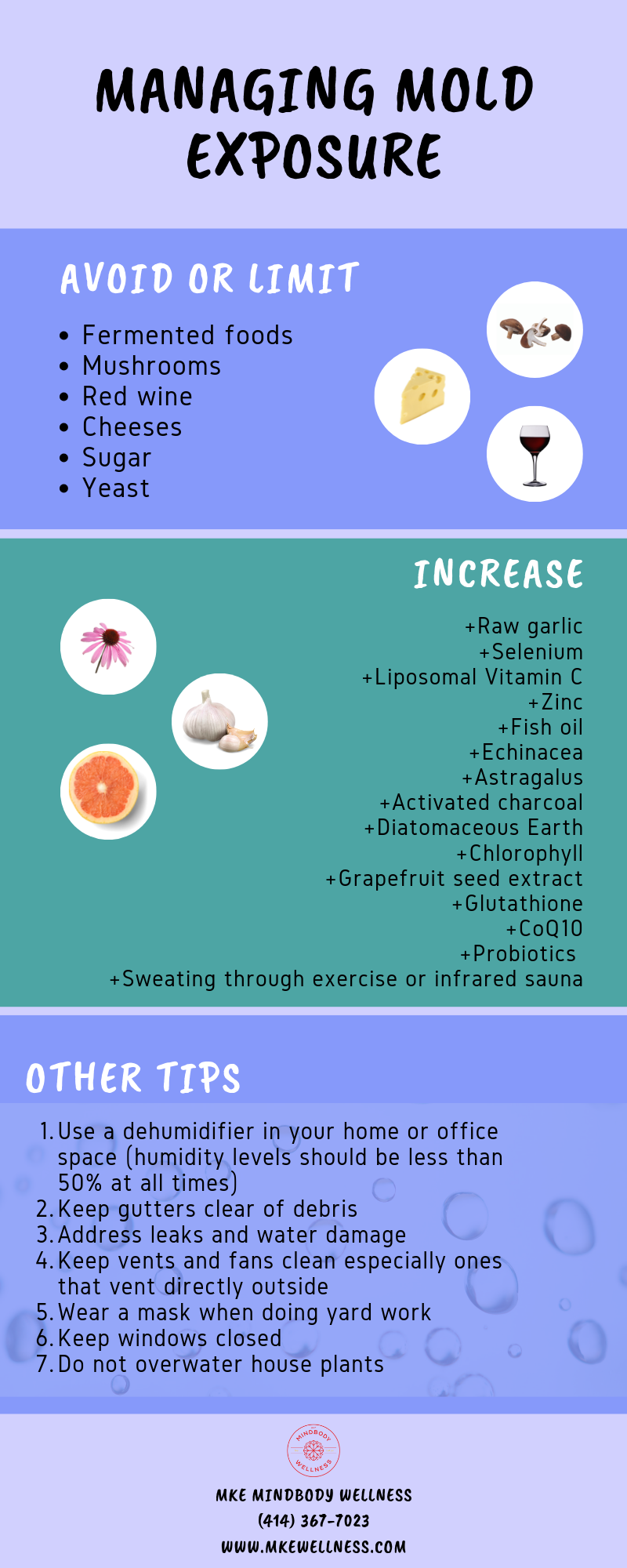
Mold is almost everywhere and unavoidable, but we can significantly decrease our exposure to it by managing our exposure. This will put less toxic-load on our bodies and immune systems to decrease or even prevent symptoms from occurring in the first place. Here is what you can do to help with mold prevention.

  1. Dehumidify--mold requires moisture to thrive so keeping humidity levels below 50% in your home and work environment is essential. Bathrooms are typically the rooms containing the most moisture so buying something like a volcanic rock in a bag which is sold in most hardware stores and hanging it will help absorb those yucky bathroom spores.

  2. Humidifiers--if you do have a humidifier in your home or work space, make sure to clean it once a week to prevent bacterial and mold infestation that may have built up in the machine. This can be done by adding 1 cup of apple cider vinegar with 1 gallon of water into the humidifier weekly.

  3. Inspect Outdoors--mold spores do not necessarily have to be inside to make you sick. Make sure to check around your building because these spores can make their way inside. Make sure all drains are in appropriate locations to help move water away from the building. Check that gardening sprinklers are not aiming towards the walls of your residence or workplace. Inspect any leaks or sitting puddles that may be around including your crawl space and driveways if you have them

  4. Sunlight--beaming natural sunlight into your space is the single best thing you can do to counter the unhealthy build up of mold in your immediate environment. Furthermore, the UV rays from the sun can kill most mold species.

  5. Maintain good health and immunity--since our immune systems protect us from infections and invasions, it is important to have a healthy diet, exercise regularly, get enough sleep, and keep emotional stressors low. Some herbs that boost immune function to consider include echinacea, astragalus, lingustrum, elderberry, honeysuckle, cherokee rose, and andrographis.

  6. Detoxification--herbs to help the body detox faster as we try to clear out our systems from mold exposure can include hawthorn, milk thistle, and dandelion. 

Traditional Chinese Medicine (TCM) has its own approach and perspective with mold induced conditions by eliminating and preventing damp accumulation within the body. A Chinese medicine practitioner will need to examine the extent of damp accumulation within the patient as well as their overall digestive function and Kidney fire energy. 

Based on TCM nutrition, all dairy products should be avoided. This includes cheese, milk, yogurt (although exceptions can be made with yogurt). Sugar, sweets, white flour, refined starch, and alcohol should be limited if not completely eliminated from one’s diet. Excess raw fruits because of their sugar content and raw vegetables due to mold in the soil need to be carefully consumed. Mushrooms and other fungi can be toxic to the body when being exposed to too much environmental mold. Tomatoes which typically are not discussed attract mold to them very easily and need to be eaten with caution. Excess fermented foods can also cause further damp accumulation in the body. Anything containing yeasts and vinegar also need to be avoided. Fatty, greasy, and deep fried foods are always a bad idea if you want to maintain good health and a strong immune system. 

The basic idea in Chinese medicine is to consume more foods that are warm and cooked and eat less foods that are raw and cold. Raw and cold food and drinks are very damaging to the digestive fire that is needed for our metabolisms to function at optimal levels. If you do eat raw and cold try countering that cooling temperature with things that are warming in nature like garlic, onions, turmeric, ginger, fennel, clove, cayenne, pepper, cinnamon, chives, parsley, etc. 

Not typically discussed and acknowledged is the impact that stress has on our lives. Keeping cortisol levels down and our nervous systems out of a fight-or-flight response allows our immune system to perform the way it is meant to. A daily stress management program and quick coping techniques are highly recommended and essential to maintaining a healthy immune response. 

Acupuncture also helps our bodies to return to a state of balance and homeostasis by effectively restoring and supporting healthy functions. 

The problem with mold is increasing due to heightened awareness and better understanding of how excess exposure can create harm to the body. It is up to each individual to become sensitive to one’s environment, to identify possible causal factors, and be proactive to prevent mold infestation. A good practitioner or healer will help and guide you in the right direction, but true healing comes from healthy daily practices and habits. 

Mold Infographic.png